
🗺️ Why You Should Map Out Your Classes Before You Even Apply ✅
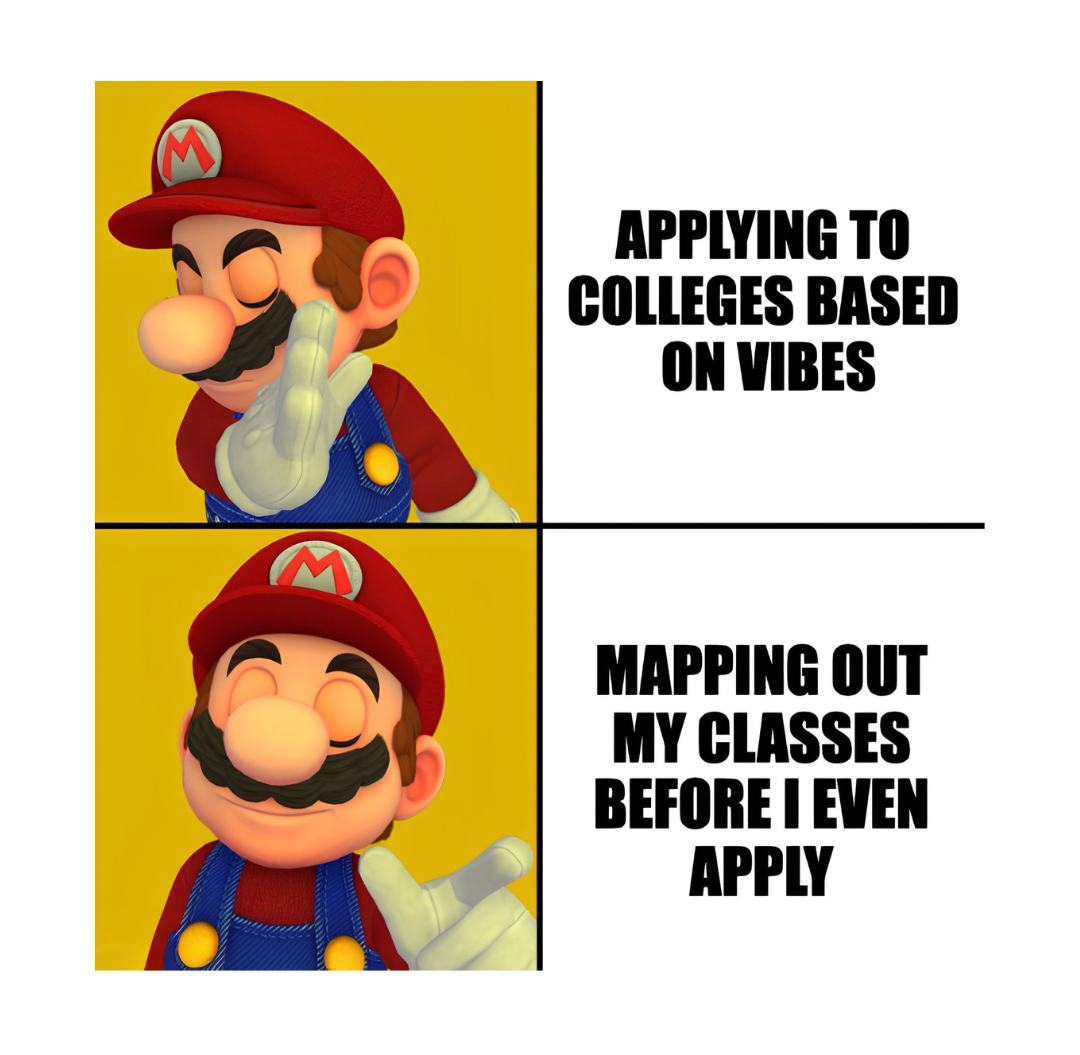
Let's say you want to go to Yale.
And let's say everything goes right—you apply, you wait, you refresh your portal one too many times, and then you get in.
At some point, though, the celebration ends and reality kicks in. You'll have to decide what you're actually going to do there. Which classes will you take? What will you study? How will you spend four of the most formative years of your life?
So why wait until after you're accepted to think about those questions?
Why not start now, before you even apply?
Here are three reasons why mapping out your classes early might actually help more than you think:
1. It helps you figure out whether the school is truly a good fit.
Prestige is tempting. Big names are tempting. But no college—Yale included—is automatically the right place for every student.
By looking closely at a school's course catalog, majors, concentrations, and interdisciplinary options, you get a much clearer picture of what your day-to-day life would actually look like. Are there classes that excite you? Programs that align with your interests? Professors whose work you'd want to learn from?
If the answer is no, that's not a failure—it's a gift. Better to realize now that a school doesn't offer what you need than to discover it after you've committed. And if it doesn't fit, there are hundreds of other excellent colleges that might suit you far better.
2. It strengthens your “Why Us?" statement. 💪
Admissions officers can tell when an essay is vague. Saying you want to attend a school because it's “prestigious," “innovative," or “has great opportunities" doesn't stand out.
📌 But when you can point to specific classes, academic tracks, or intellectual paths you want to pursue—and explain why—you demonstrate real thinking. You're not just hoping to get in; you're envisioning yourself there.
Knowing which classes you'd take helps admissions officers see you as a real student on their campus, sitting in real classrooms, engaging with real ideas. That kind of specificity makes your application feel grounded, intentional, and credible.
3. It shifts you from fantasizing to envisioning your future. 🔮
This is the most important reason—and the most overlooked.
There's a difference between dreaming about college and actually imagining the process of becoming who you want to be. As Douglas LaBier explains, a fantasy is a vague wish—an idealized outcome detached from steps, effort, and reality. A vision, on the other hand, is detailed. It's lived-in. It includes the work, the progression, and the growth required to turn an idea into something real.
When you choose classes ahead of time, you're not just imagining the acceptance letter. You're imagining the learning. The struggle. The questions you'll wrestle with. The skills you'll build over time.
That's when your goal starts to solidify.
❓So ask yourself an honest question:
Are you thinking about getting into college as a way to get something—status, validation, ego?
Psychologist Douglas LaBier warns that goals rooted purely in self-gratification are actually less likely to lead to meaningful outcomes. He argues that the most creative and fulfilling achievements come from “forgetting yourself"—from investing your energy in something larger than your own success.
That reframes the entire purpose of college.
Instead of seeing classes as boxes to check or credentials to collect, start seeing them as tools—tools for contributing, solving problems, and serving others.
🤔 Try rethinking the goal of getting into college.
When you map out your classes, you’re not being premature; you’re being intentional. You’re deciding that college won’t just happen to you, but that you’ll do something with it.
The name on the diploma matters far less than what you learn, how you grow, and what you carry forward when you leave.
So don’t just ask where you want to go.
Ask who you want to become—and what you’ll need to learn to get there. 👍