
“Cheesed Off”
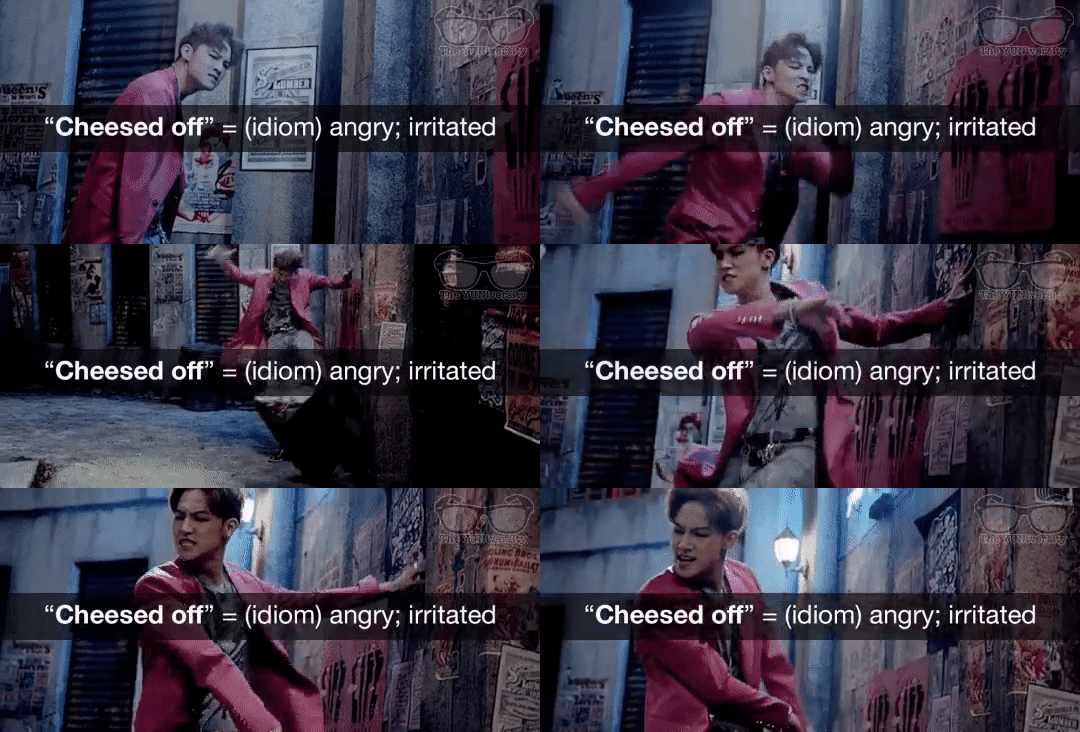
GOT7 — “If You Do”
💭 Meaning
To be “cheesed off” is to be annoyed, irritated, or angry about something; it’s a milder, more lighthearted way of saying someone is upset.
✍️ Examples
Henry was a little cheesed off when the school changed the interview time without notice.
The student got cheesed off after spending hours revising an essay her teacher barely glanced at.
Henry remembers being cheesed off in college when his group project partner canceled last minute, leaving him to finish the presentation slides alone.
📜 Origin
The exact origin is debated, but the phrase is believed to have emerged in British military slang during the early-to-mid 20th century, possibly as a euphemistic softening of the cruder phrase “cheesed" or similar expressions tied to frustration in the armed forces. Some theories suggest “cheese" was linked to something going sour or unpleasant, much like spoiled cheese, giving the phrase its negative connotation. By the mid-20th century, “cheesed off" had become common in British English as a casual, relatively polite way to express annoyance, eventually spreading into wider use across English-speaking countries.