
“A Dime a Dozen”
💭 Meaning
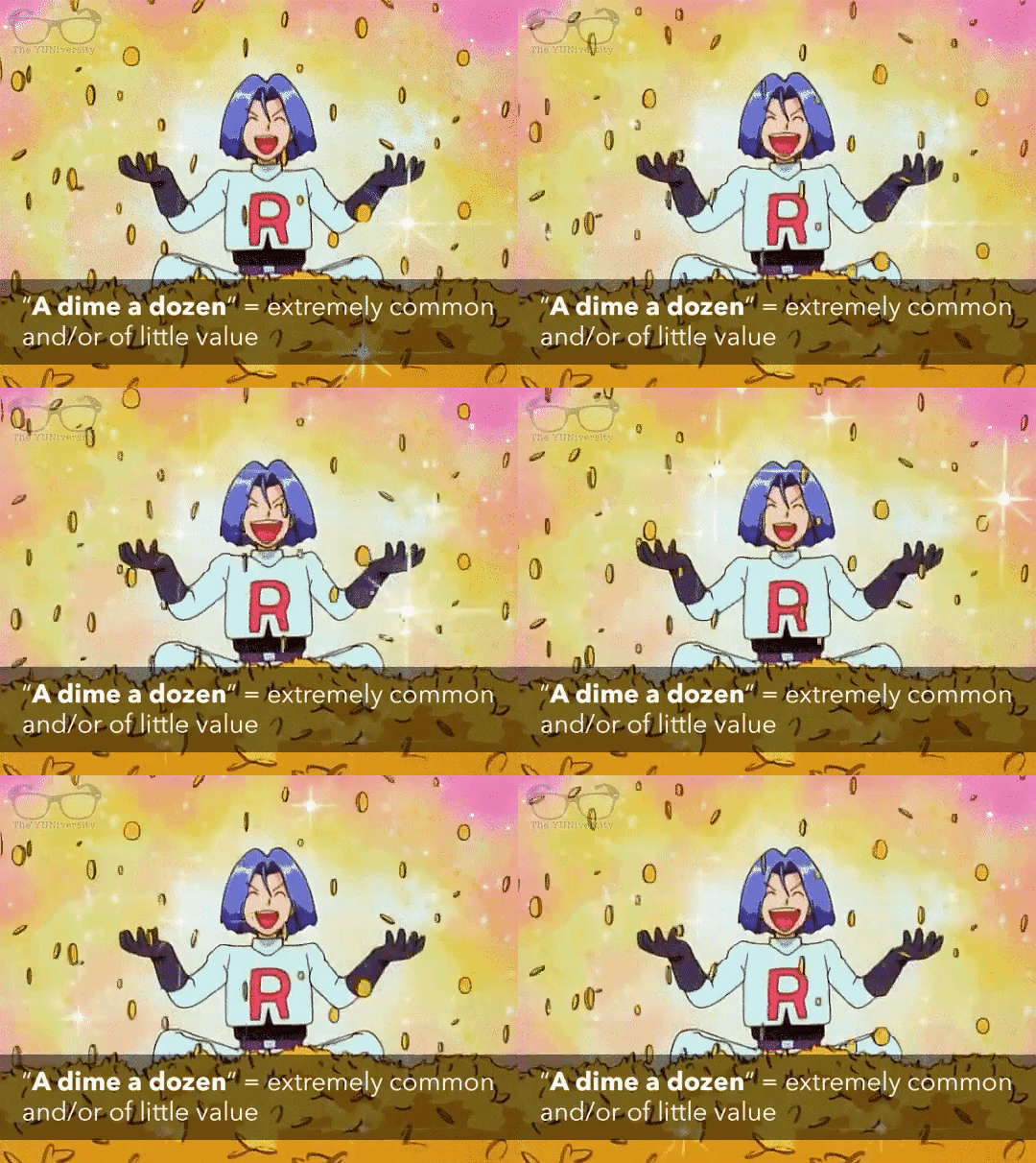
“A dime a dozen” refers to something so common or plentiful that it holds little value or feels unremarkable, i.e., something that’s easy to find and not special or rare.
✍️ Examples
Henry reminded his student that “I want to help people” essay openers are a dime a dozen, and admissions officers can spot them instantly.
Generic personal statement templates are a dime a dozen online, but Henry's guidebook focuses on genuinely original approaches.
In a competitive applicant pool, perfect test scores are practically a dime a dozen; it's the essay that has to stand out.
📜 Origin
The phrase traces back to 19th-century America, during a period when the U.S. dime (first minted in 1796) was a small but usable unit of currency for everyday purchases. At the time, certain mass-produced or abundant goods, such as eggs, apples, or nails, were literally sold at a rate of a dozen for a dime, reflecting just how cheap and plentiful these items were. As industrialization increased the availability of goods throughout the 1800s, prices for many everyday items dropped, making the “dime a dozen" pricing structure a common enough occurrence that it entered everyday speech as a literal description of affordability and abundance. By the early 20th century, as inflation gradually made the literal price less accurate, the phrase shifted away from describing actual cost and took on a broader, figurative meaning: anything so common, replaceable, or unremarkable that it wasn't considered valuable or rare. This figurative usage became firmly established in American English by the 1930s and 1940s, appearing frequently in newspapers, advertisements, and everyday conversation to describe everything from overly common opinions to unremarkable talent in a crowded field.