
“Double-Edged Sword”
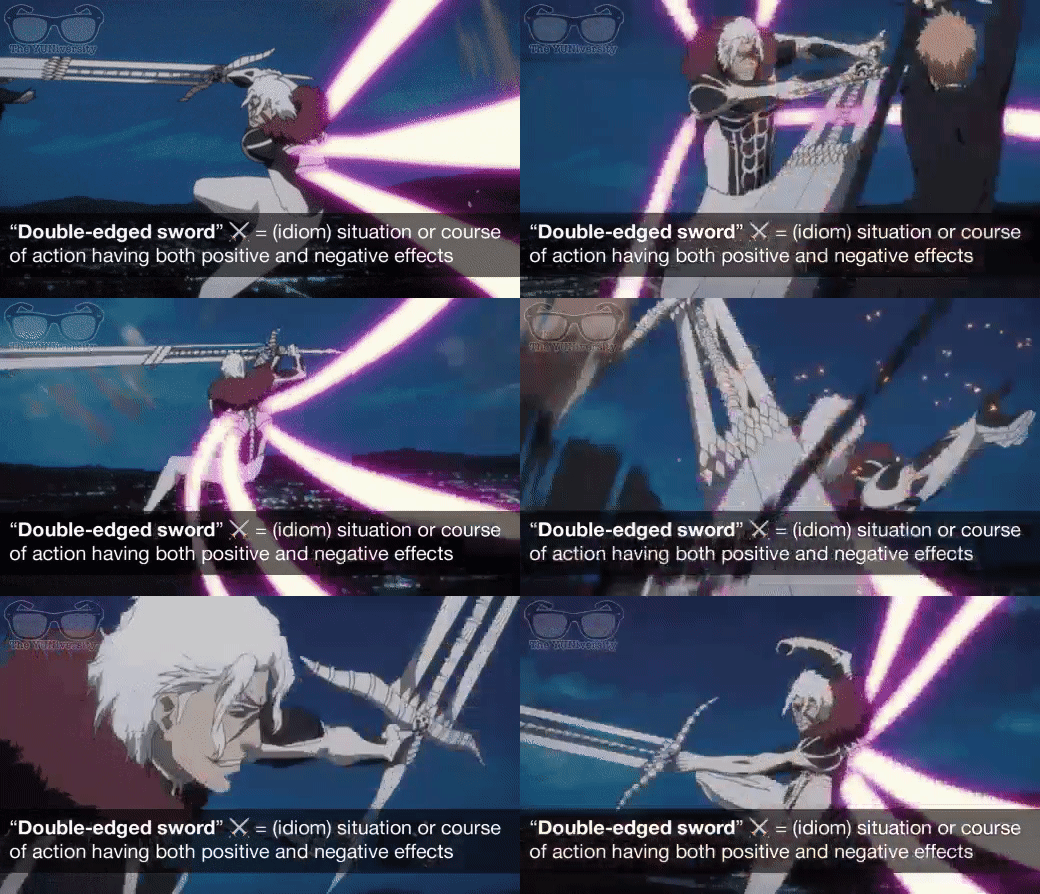
💭 Meaning
A “double-edged sword” is something that has both significant benefits and significant drawbacks, i.e., a situation, decision, or tool that can help or harm depending on how it's used or approached.
✍️ Examples
Henry warned his student that writing about a personal struggle can be a double-edged sword: powerful if done thoughtfully, but risky if it overshadows growth.
Early decision can be a double-edged sword, offering better odds but locking students into one binding choice.
Henry found that online writing tools were a double-edged sword for his students; some were helpful for brainstorming but tempting to overuse.
📜 Origin
The phrase comes from the literal design of certain swords sharpened on both edges, making them effective for attacking in multiple directions … but also more dangerous to wield, since a miscalculated swing could just as easily injure the person holding it. This dual nature of being powerful yet risky made “double-edged sword" a natural metaphor by the medieval era, later reinforced by biblical references (including Hebrews 4:12, which describes the “word of God" as sharper than a double-edged sword). By the 20th century, the phrase had become a common idiom in English for describing anything with both clear advantages and real risks attached.