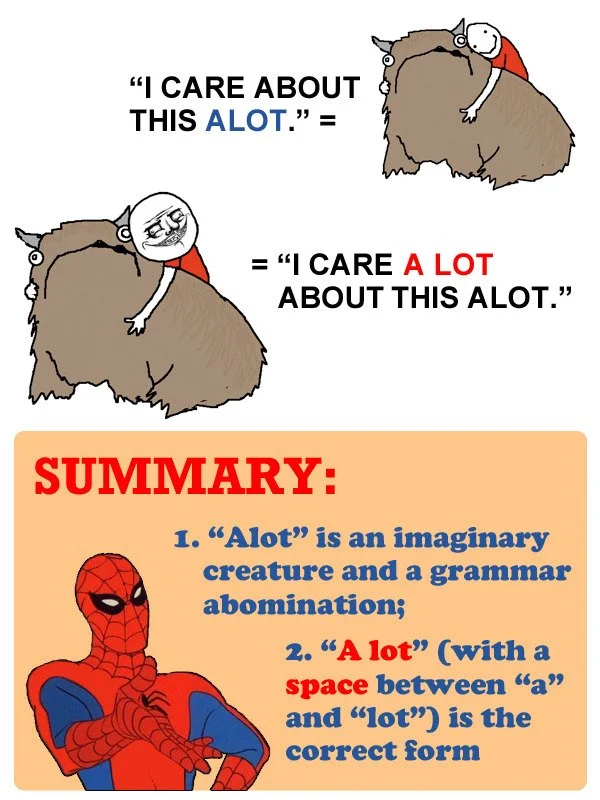
“A Lot” vs. “Allot” vs. “Alot”: What’s Actually Correct? 🤷🏻
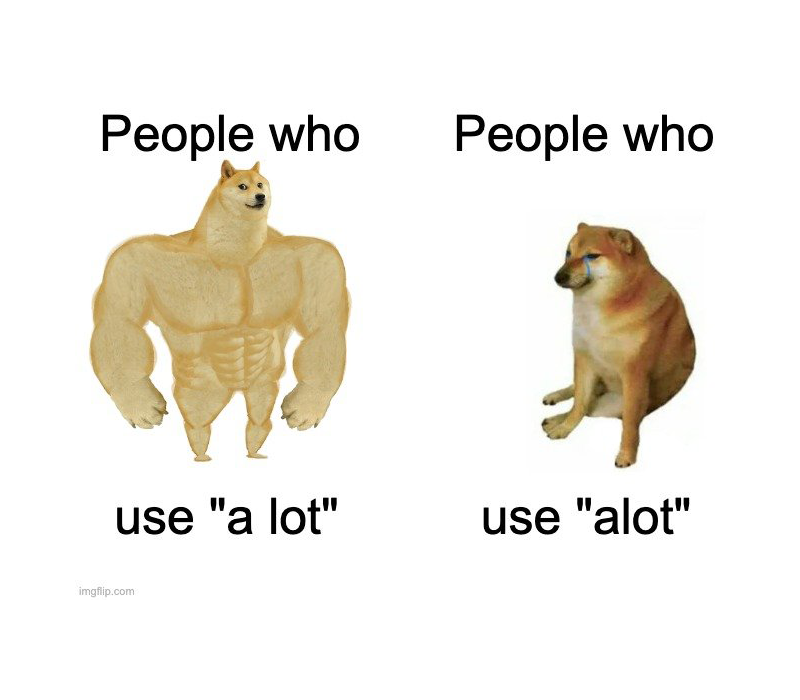
If I got a dollar every time someone used “alot” instead of “a lot,” I’d be able to buy Twitter X.🤑
Here's the truth: “alot" isn't a formal, standard word. It never has been, no matter how natural it feels to type.
Let's clear up the confusion between these three.
“A Lot" Is Always Two Words
When you mean a large amount of something, it's “a lot": two separate words, every time.
I have a lot of reading to do this weekend.
She has a lot of patience with her younger siblings.
There's no version of this phrase where it correctly becomes one word. If you're describing quantity, keep it as two.
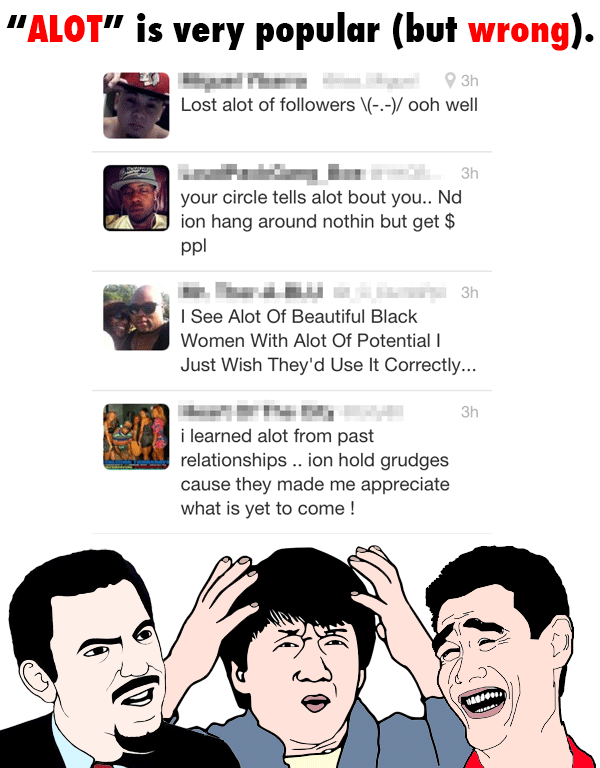
“Allot" Means Something Completely Different
“Allot" isn't a misspelling of “a lot" at all; it's its own word, meaning to give out or assign a portion of something.
The teacher will allot fifteen minutes for the quiz.
Each department is allotted a fixed budget for supplies.
Notice the double “l." That's part of what makes it easy to mix up with “alot": the letters look similar, but the meaning is entirely different.
Why “Alot” Trips People Up
Part of the confusion comes from English itself. Words like “already," “altogether," and “almost" all started as two words and eventually merged into one. So it's not unreasonable to assume “a lot" might follow the same pattern. It just didn't … and outside of texting shorthand, treating it as one word will read as a mistake in any formal writing.
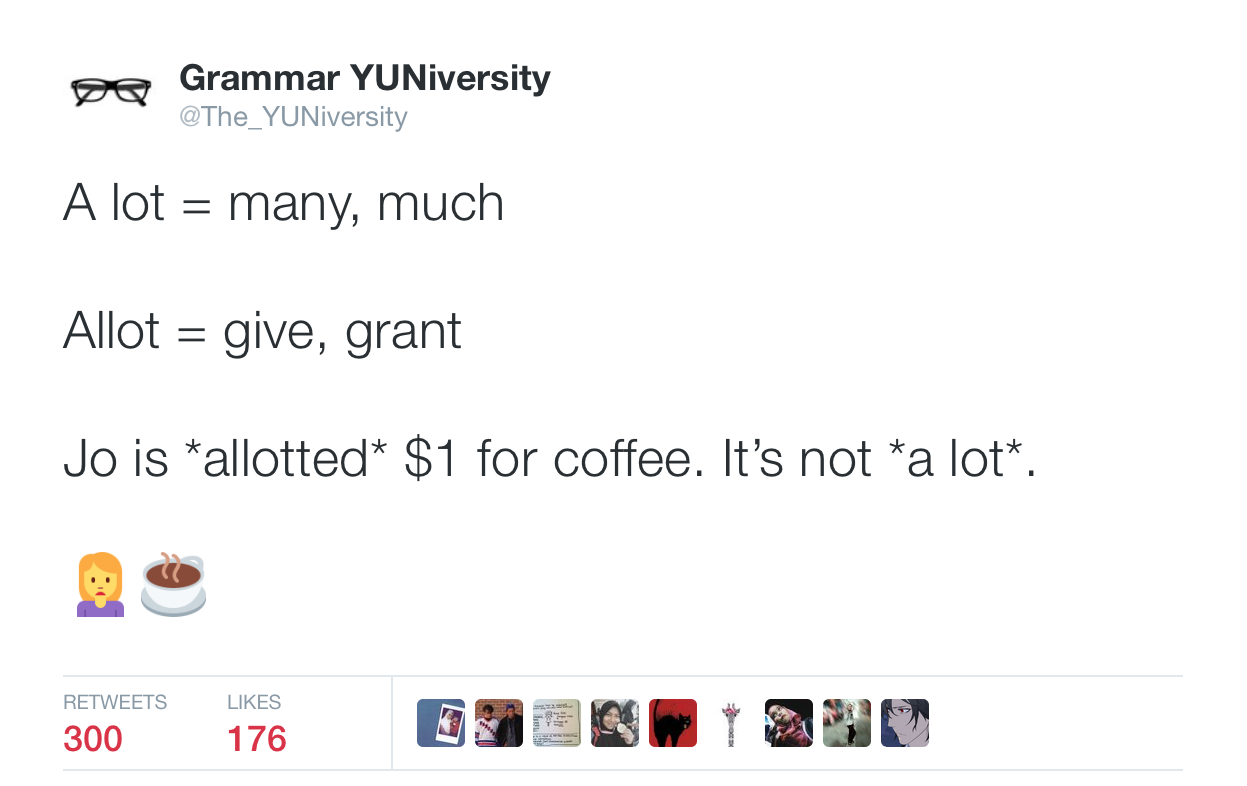
Although I have not gone over my allotted space, I think I’ve said a lot. So with this recap, I bid you adieu. 👋
A Quick Way to Remember
Ask yourself what you actually mean:
Talking about quantity? → “a lot" (two words)
Talking about distributing or assigning something? → “allot"
Typing “alot"? → Stop. It's not a word … unless you’re talking about Allie Brosh’s fictional creature.
It's a small distinction, but one of those details that quietly signals careful writing … which matters more than ever in something like a college essay, where every sentence is doing double duty to represent you.