👌 The Right and Wrong Way to Begin a Sentence with “Because”
✅ “Never start a sentence with ‘because’” is a total myth. You can, as long as it’s paired with a main clause. The real sin isn’t the word itself but leaving the sentence hanging (“Because I studied.”—and then ... nothing).
Many of us can remember our third-grade teacher emphatically telling us that it’s always wrong to start a sentence with “because.” Undoubtedly, their declaration stemmed from reading and hearing hundreds of fragments like the following:
Because she hit me first!
Because my dog ate my homework.
Because my dad likes fishing.
Because they were hungry.

Unfortunately, over time, we have used our teachers’ admonition to create a (fallacious) rule. When we read a sentence that begins with “Because,” our immediate reaction is “Wrong!” 😑
Let’s dispel the age-old myth that it’s always wrong to begin a sentence with “because.” The following sentences all start with “because”—and they’re all grammatical:
Because Henry revised his essay three times, his final draft felt much more polished.
Because the deadline moved up, all the students had to submit their applications a week early.
Because she practiced every day, Henry’s niece finally nailed the piano piece.
As along as we establish a cause and effect relationship, and as long as we follow the opening “because” clause with a complete sentence, we can use “because” as the first word of a sentence. Here’s the “formula”:
Because of x, a complete sentence is true.
Because the Doctor has a TARDIS, he can go anywhere in time and space. Because the Doctor doesn’t like to travel alone, he has companions.
On a related note, there was a big commotion last year when “Because (x)” became a topic of discussion—and celebration—among linguists. While words such as “twerk,” “selfie,” and “bitcoin” were hailed as several dictionaries’ and publications’ word of the year, the American Dialect Society made “because” its selection in 2013.
You can read all about how “because (x)” works here.
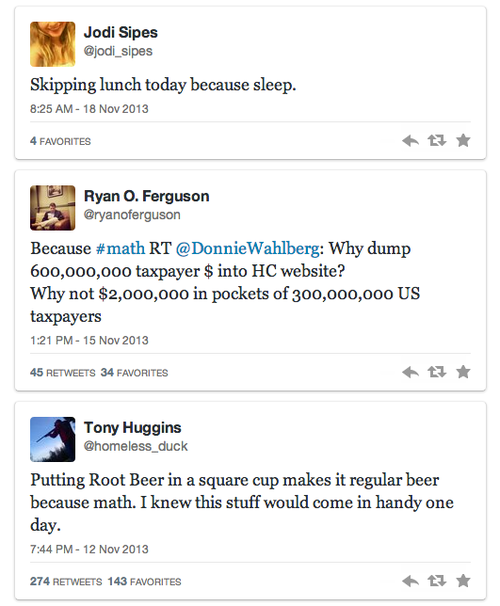
Because I’ve said everything we wanted to say, I bid you adieu. You know, because lunch. Then coffee. (Always coffee.) ☕️