
Why “Big Words” Are Sinking Your College Essay (And What to Use Instead) 💡
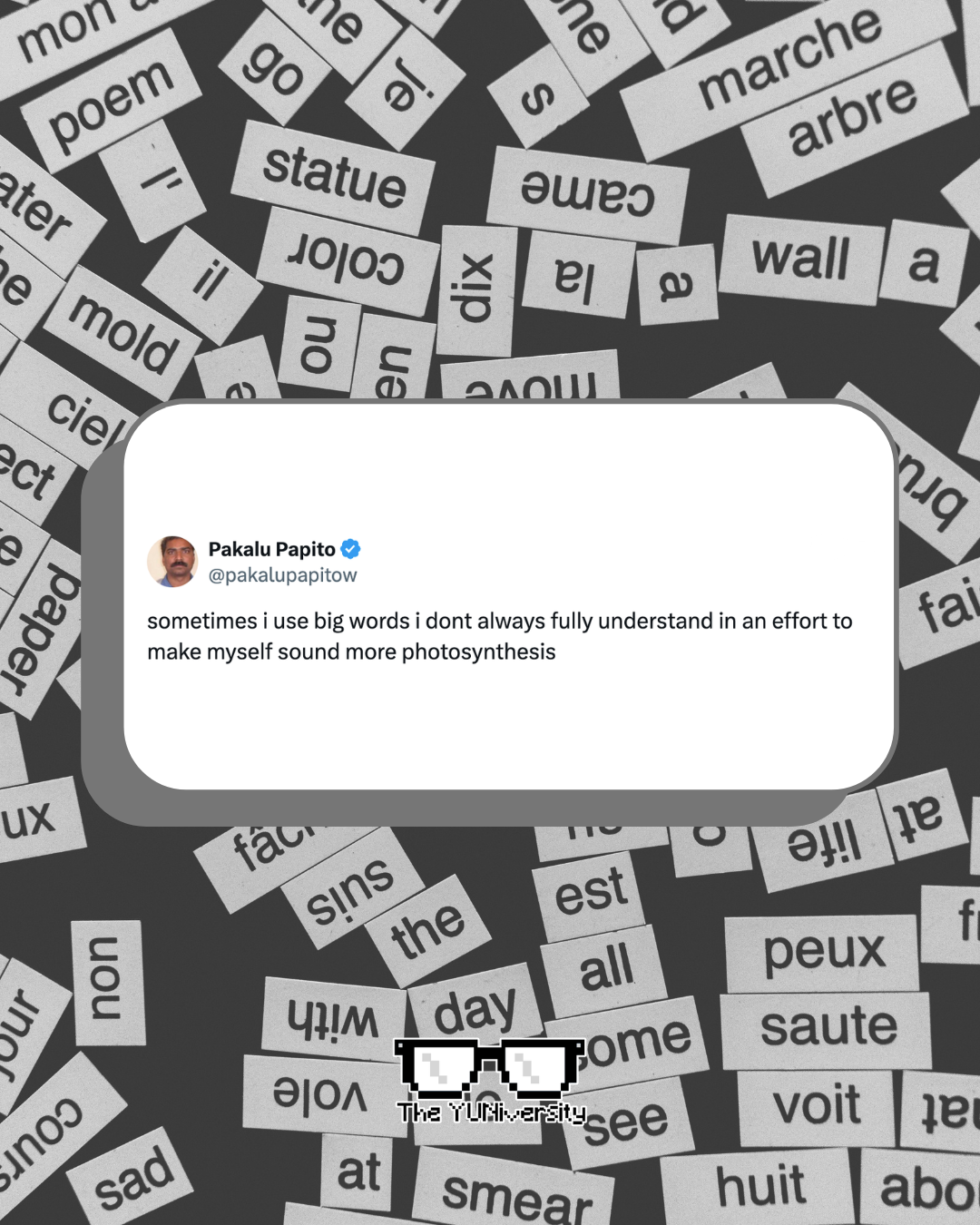
Every admissions season, I read essays that reach for words like perspicacious, utilize, or myriad … and I understand the instinct. Seventeen-year-olds have been told their whole lives that sounding smart means sounding sophisticated. But in a personal essay, vocabulary that calls attention to itself almost always works against the student, not for them.
Here's the problem: admissions officers read thousands of essays a season. What stands out isn't a thesaurus-driven sentence; it's a voice that sounds like an actual teenager thinking clearly about something that matters to them. When a student writes “My perspicacity impressed my Robotics teammates," the sentence stops being about the moment and starts being about the word. The reader notices the reach, and noticing the reach breaks the spell.
This is really a tone problem wearing a vocabulary costume. The essays that work are built on specific scenes, real dialogue, and genuine turning points … not on proving verbal range. If a word wouldn't come out of the student's mouth in conversation with a friend, it probably shouldn't be on the page. “My intelligence" or even “My critical-thinking skills” does more work than “perspicacity” ever will, because it sounds like a person, not a performance.
Where the Habit Comes From
Most of the time, this isn't the student's instinct alone. It's inherited. Years of standardized test prep reward students for recognizing and deploying “elevated" vocabulary. AP English classes often reward density over clarity. Well-meaning parents or tutors sometimes “polish" a draft by swapping in fancier synonyms, mistaking complexity for quality. By the time a student sits down to write their personal statement, they've been trained to believe that simple language is a weakness to hide rather than a strength to lean on.
The irony is that admissions officers are trained to spot exactly this. A sudden shift in vocabulary mid-essay, where a paragraph about a students's grandmother's kitchen suddenly detours into words like “quintessential" or “ubiquitous," reads as a red flag, not a strength. It can even raise quiet questions about how much of the essay is the student's own voice. 🤨
What to Do Instead
A useful test I give students: read the sentence out loud. If you'd feel embarrassed saying it to your best friend, rewrite it. Essays aren't SAT vocabulary showcases but a chance for an admissions committee to hear an authentic voice make sense of a real experience.
Instead of reaching upward for a fancier word, I tell students to reach inward—toward the specific. Rather than describing a moment as “an arduous and formidable challenge," name the actual challenge: the 6 AM practices, the heated argument with a coach, the specific fear before walking on stage. Precision beats grandeur every time. A well-chosen concrete detail will always outperform an abstract, impressive-sounding phrase, because details are what make an essay memorable, and abstractions are what make essays forgettable.
This same principle carries through to endings. The strongest closings I see never rely on an impressive word to land the emotional note; instead, they rely on an honest, specific one. A closing line that names exactly what changed, or exactly what the student now understands, will stay with a reader far longer than a beautifully constructed but vague final sentence.
If your essay is full of words you had to look up how to spell, that's not a style … it's a pretty clear signal to revise. Good writing, especially in a personal essay, isn't about sounding impressive. It's about sounding true. 👌